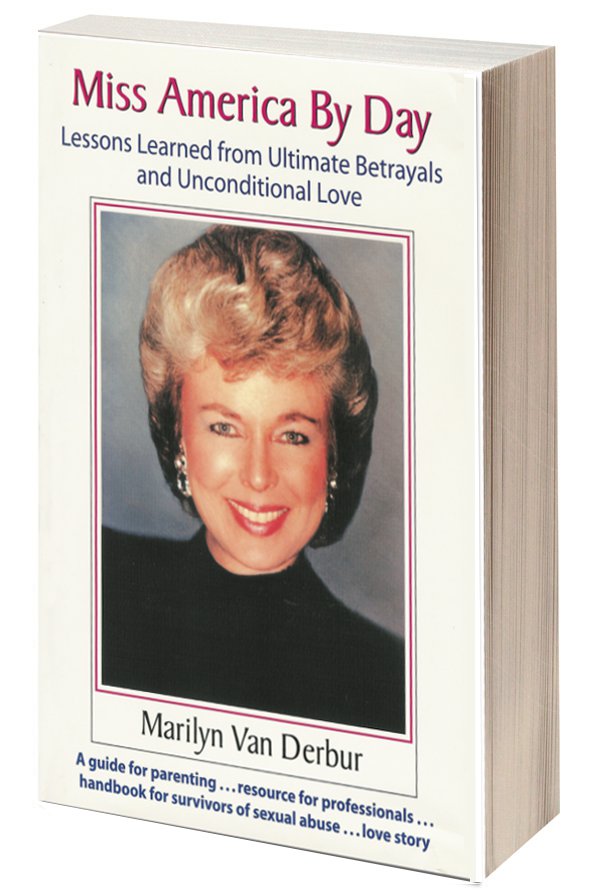
I recently finished reading Miss America by Day, by
Marilyn Van Derbur.This is by far the
best book I have read as far as understanding what a victim of sexual abuse
actually goes through, what the trauma is like.There is also lots of useful information, tips, advice, and other great
material, but the best aspect of the book is the way she makes the trauma real
to all of us.I recommend it to anyone
who wants to understand the issue of child sexual abuse better.
An article I just wrote for the Jewish Press (in the quarterly mental health insert) is available online here. It discusses how our expectations affect our parenting and how we can help ourselves out of the box that such expectations can create.
Rabbi Noach Orlowek, shlit”a, defines anger as “the distance between expectation and reality.” I think this definition neatly explains much of the parental anger that we moms and dads struggle with as we try to raise superstar children. So much of our anger is the result of our having expectations of our children that are not met. This does not mean that we shouldn’t have expectations of them – only that we should be careful to temper those expectations with a clear picture of reality . . .
“With online counseling, your clients do not have the
ability to learn about you from the frames on your walls, your office décor,
your car in the parking lot, the pictures of your family on your desk, etc.
Therefore, it is all the more important to humanize yourself by telling the
client some information about who you are and what you are about.”
This is from an article
from Thriveworks on building rapport (connection with a client) in
online counseling venues.On the whole I
thought the article was so-so, but it did have some points like the
above that made me think.This goes back
to a
post I wrote a while ago about using the phone vs. Skype, and how there are
innumerable nonverbal messages that a client communicates that the therapist
cannot afford to miss.I guess that’s
true the other way around as well, as pointed out in this quote – in person,
you would learn a lot more about me than you can via Skype (such as, for
example, what shoes I’m wearing, or whether I’m even wearing shoes!).
To this end, I encourage you to read what I wrote in the About Me section, and
feel free to ask if you have any further questions about who I am or what I
do.That's not to say that I will
start telling you the story of my life, but if you have a question, don’t
hesitate to ask!
An interesting point I have recently been reminded of
emphatically while working with couples: the points of dispute brought into the
room are almost never where the juicy stuff lies.(With the couple I am thinking of right now,
those points of dispute were particularly angry ones, too!) The truth is that
it’s really all about the dynamic in the room.Whatever problems they’ve been having thus far are still ongoing, or
they wouldn’t be in therapy.So I can
watch those problems play out without having to refer to old incidents to make
the point.
What’s more, throwing past incidents at each other – known
in the business as “kitchen sinking” – rarely does more good than harm.It just invites more hurt, defensiveness, and
aggression.(This is something useful
for all of us to keep in mind when we get into arguments with our spouse – or
with anyone – launching repeated accusations over past events will only hinder
the process rather than helping it.
The concept of bashert has done many people a lot of harm in their quest for a long-term relationship. I thought this posting brought some solid sources from modern times that indicate that this concept is not to be relied on practically to find love. Trying to find The One Who Is Meant for You is a much more difficult endeavor than trying to find Someone with Whom You Can Build a Meaningful, Holy Life. More on this in a future post.
This past Tuesday the standard greeting in the Northeast switched from,
“Do you have power?” to, “Did you vote yet?” There was an expectation
among most community members that people would be voting, whether or not
our lights were back on . . .
A friend of mine in Houston, Texas contacted me in relation to the
article I published on destigmatizing therapy. She is working with a frum family whose daughter
is suffering some kind of attention disorder.In order to proceed with therapy, she had to contact the girl's high school,
but the family was reluctant to allow her to do so, since they did not want the
school to learn about their child’s disorder and treatment.It is not clear whether they were doing so
out of embarrassment and shame over their daughter's condition, or out of fear of
potential consequences from the school administration, which itself may have
prejudices and biases regarding mental illness.
This seems to echo the dilemma I brought up in the article,
namely, on one hand a therapist is bound to protect client confidentiality; on
the other hand, the therapist does not want to reinforce the idea that there is
anything to be ashamed about.
If you’re reading this, you probably have power back by now. Or maybe
you’re reading this at work. Or maybe you’re one of the lucky ones who
never lost power in the superstorm-formerly-known-as-hurricane-Sandy.
And if you’re reading this, you have probably also seen the
never-thought-I’d-see-THAT-outside-of-a-Hollywood-blockbuster images
that have been flooding the Internet: parts of New York City neck-deep
in water; subway tunnels turned into log-flume tracks; 12-foot walls of
water smashing into urban hubs. And how about the financial nexus of the
world shut down for two straight days (which they tell us hasn’t
happened since the ol’ blizzard of 1888)? The presidential campaign
derailed days before the election? Pretty incredible.
Escalator under water at South Ferry station Photo Credit: MTA
If you have not been scrambling for hot water and a place to charge
your iPhone, you may have had time to reflect on all of this.
To me, it is not just a reminder of how big G-d is, but of how small
man is as well. Even the most powerful among us was not able to save NYC
from shutdown. No amount of money was able to bring water to the
burning houses in Queens. No amount of preparation could keep the
airports open. Even folks who are not religious would have to look into
the face of nature and admit powerlessness, if only for a time.
We go about our business every day, hardly realizing how much we
depend on matters completely outside our control. When the power went
out, most people just had to deal. Here in Passaic, Main Street has been
completely disabled, including the kosher grocery store; many ran low
on basic food supplies, until other supermarkets nearby opened up and
got running again. What if they hadn’t? What if this had been an actual
hurricane, a category 2 or 3 or 4? We could actually be without food.
For people who are well-off, the thought is hard to imagine. A
personal famine in the age of plenty? But if the roads are blocked, if
gasoline is inaccessible, if the power in the stores is out – it is a
real possibility.
It wouldn’t take much to make such a scenario a reality: a drought; a
serious oil embargo; a contagious epidemic – any of these could cripple
a city, state, or nation far worse than what has already happened to us
this week. We tend to forget nowadays that we still live in a world
that runs on environmental processes. We are so detached from the
natural world these days that we hardly realize that we still need rain
to grow our food! There isn’t yet a laboratory on the planet that can
synthesize wheat, or soybeans, or water (and odds are you wouldn’t
survive for long on jellybeans and Laffy Taffy).
Our
human frailty is brought to the fore in a disaster like this. Which is
why it’s also such a great time for community building. We really need
each other as people. We forget this too nowadays. We forget that in the
long history of mankind, almost no society expected parents to raise
children without an entire network of help. We forget that carving out
time for friends and neighbors is not a luxury but a necessity to make
it through life’s challenges (and that our ancestors, from the Biblical
through the rabbinic times, all knew this well).
On the Day After Sandy I watched my neighbors across the street take
turns sawing at branches and working on contriving a way to get an
extension cord safely from one powerless house across the street to a
powered one. We all appreciate the togetherness that comes out of these
times; do we remember how much we need it?
The human condition is fragile and uncertain. It seems unlikely that
we will ever be able to beat nature – to control the weather, to produce
nourishment from inorganic materials, to create life from scratch in
the lab. We will just have to live with the constant possibility of
powerlessness.
But to recognize that and to cast our lots in with those around us –
to recall even in times of prosperity and apparent control that we can’t
go it alone – that is a message which ennobles us above all the
creatures and forces of which nature is made. For nature is blind, and
one beast cannot help another unless it is so commanded by its genetic
makeup; but we can offer each other a cup of hot coffee when the power
is out, a shelter from the storm, or simply a hug in a time of tragedy.
And that is what makes us truly human in the face of a hurricane.
This may be old news for those of you more on top of current events, but I just found out about the suicide of 15-year-old Amanda Todd in Vancouver, Canada. She killed herself after suffering sexual abuse at the hands of an anonymous internet user and then being bullied, harassed, and generally mistreated by her peers. The tragedy of the story is too big to be contained.
Amanda posted a video on YouTube shortly before she died. You can see it here. (Some may want to avoid viewing this - while it is not explicit, it is not so tzniusdik either.) It is terribly sad, but perhaps it is a good reminder to all of us that we have a lot of work to do in this world - and if you think this kind of thing doesn't happen in the frum world, think again. It is also a good reminder to parents that children and teens need guidance and monitoring around their internet use, and especially around use of social media.
I am working on creating a program for middle schools so that we can avoid exactly this kind of tragedy in the future. It is just too, too sad.
Yesterday’s presentation at ORA went swimmingly. We all gained some valuable information, myself included.
While I was preparing for yesterday’s presentation to ORA earlier this week, I came across this very interesting article about gett refusal in Israel. It’s in Hebrew, and though you can use Google to translate it, I will share with you what I found to be the most interesting points:
Despite claims that there are thousands of agunot in Israel, the actual number (this is from a 2006 report) is 180.
Even more interesting is that the number of agunim in Israel is 190.
I brought this up at the presentation and it was suggested to me that the situation in Israel is different because the entire divorce process is bound up with the gett, such that if a woman doesn’t like the terms of the divorce that have been presented and doesn’t want to accept them, the husband is considered “chained.” I.e., it may not be a case of “gett refusal” as much as a case of willingness to divorce but wanting better terms. ORA told me that out of the hundreds of cases they have dealt with, only a handful have been men. Similarly, another organization that works with agunot also told me that in 30 years of working with gett issues, they have only been contacted once by a man whose wife refused to accept the gett.
Unrelatedly, another interesting point that came up during the discussion yesterday was the infamous Rambam apparently condoning wife-beating. I referred to questioner to this essay, which I think is a brilliant elucidation of that puzzling statement.
Tuesday, October 16, 2012
I am presenting in Manhattan tomorrow for ORA, the Organization for the Resolution of Agunot, on domestic violence in the Jewish community. Obviously the problem of husbands refusing to gives their wives a divorce is intertwined with this issue. Should be an interesting discussion!
An article of mine was published this week on the OU Life website (unrelated to the fact that I coincidentally posted another article on that site a few days ago). Check it out here. (Note: they chose the title and the accompanying photo, not me!)
I just signed a petition to The New Jersey State House, The New Jersey State Senate, and Governor Chris Christie: We, your NJ constituents urge you to fix NJ law by eliminating the
statute of limitations for child sexual abuse and expand the categories
of those who could be held responsible when they put our children in
harms way. Pass bills S1651 and A2405 unchanged, in the Senate and
Assembly. And we call on you, Governor Christie to please sign it into
law. Lawmakers have a choice... vote to protect our children not the
sexual predators and the institutions that have harbored them.
I just saw an interesting and painful post on one of the few
blogs I regularly keep up with,
citing one of the many blogs
that I don’t, which posted a letter
by Pearl Engelman.Pearl is a
fascinating person (whom I have never met), in that she is a member of the
notoriously insular Satmar community who campaigns very publicly against sexual
abuse and the cover-ups that happen in the frum community.(Pearl’s son was molested by a rebbe as a
child and subsequently left the frum community as a result not only of the
molestation but of the treatment he received at the hands of the community as
well.)
The post bemoans the way the case of Nechemia Weberman in Brooklyn is
being handled.Weberman is the latest in
a line of frum paraprofessionals to be accused of molesting the youths they counsel.In Weberman’s case, immediately after the
accusation came out, the community pulled together a massive fundraising effort
on his behalf to pay for his legal fees.To many activists and advocates for victims of sexual abuse (myself
included), this is infuriating and intolerable.
Many have asked why the Orthodox community is so awful in
the way it handles child sexual abuse. Dr. David Pelcovitz, an acknowledged expert on
abuse in the frum community, says that he speaks about the issue all over the
world, and he is frequently embarrassed by secular authorities asking why the
Orthodox community is more invested in protecting the perpetrators than the
victims.It doesn’t look good, to say
the least, and it is truly painful and embarrassing to the many Orthodox Jews
who wish their community would live up to its own standards. I feel that Pearl’s post, and the encouraging
comments that follow it, stop short of providing a solid explanation for this disgrace
in our community. So here is my take on why this happens.
For far too many members of the Orthodox community, an
observant lifestyle is simply what they grew up with.It is the only thing they know, and it
perpetuates itself out of habit rather than out of conviction.“This is what everyone else does, this is
what we’ve always done, and this is what I do.”It is not terribly common for frum folks (ba’alei teshuvah aside,
perhaps) to sit down and examine their beliefs, why they hold them, or whether
they make sense – especially in the very insular, traditional communities where
such questioning is implicitly and explicitly discouraged.(Note that I am not saying all members of one
group or another are this way; I am lamenting that this approach is found everywhere
in the frum world.)
Such people are denied the meaningful identity that comes
from a true connection to Torah.Their
self-concept derives instead from community norms and the conformity to them
which is demanded by their peers.Adherence to these norms is reinforced by teaching that we are the Chosen
People, and that only we (whichever community “we” is) have things right. (The
lack of acceptance among different frum groups of other frum groups is not
something anyone is hearing here for the first time.)Anyone outside our community is mistaken,
some more, some less.All nonreligious
Jews are apikorsim; all Christians are fools; all atheists are immoral; all
scientists are biased.But not us!Because we have the Torah!We are wise and moral and perfectly
objective, or so the thinking goes.(I
believe that this is also the source of frum rejections of scientific ideas and
dismissals of good deeds done by non-Jews.)
For someone who really does “have” Torah, discovering that a
Jew with a big beard and a reputation to match has been involved in something so
deplorable as sexual abuse is sorrowful but not incomprehensible. It simply becomes clear that that person doesn’t
actually have a real connection to Torah.But to those whose frumkeit is really just an external adornment, a
robotic comportment, the Jew who looks the part but violates children sends the
message that the community’s values – the values around which their lives revolve
– are worthless or corrupt.It means
that “frum people are wrong.”But frum
people can’t be wrong, because that would mean that I am wrong.(This is similar to the reaction that we see
people having when these matters come to light – “He can’t be doing these
things; he’s a fine person, I’ve known him my whole life” – i.e., “I can’t be wrong!”See this video for an example
of people saying exactly this kind of thing.)For such people, allowing that someone who looks and acts religious
could commit such a heinous crime is be to undermine the very basis of their self-concept.
This, I maintain, is why we see people vehemently, even violently
reacting against anyone who makes an accusation of sexual abuse in their
community, often in very short order.Ultimately, they are not protecting that person: they are protecting
themselves.They are shielding their
very identities, which have been built like castles in the sand on what others do
and what others think, but unfortunately not on Torah.And when it comes to protecting a weak sense
of self, people will go to very great lengths, at very great cost.
I reread my previous post on Darkness to Light's Stewards of Children program and I realized I didn't do justice to the website. The Stewards of Children program, as I said, may be unexceptional, but the site itself is really quite fantastic. They have a tremendous amount of information, resources, tools, trainings, etc., and I have no doubt that the world is a safer place because of them. I just didn't want anyone to think I was casting aspersions on the site as whole.
On Ha'aretz.com yesterday there was an encouraging article on the success of a new Hebrew book designed for the Chareidi (ultra-Orthodox) community which teaches kids how to stay safe from abuse. The fact that such a book finally exists is a major milestone - though from what the article says, it seems that it's a bit watered down to meet the community's need for modesty. Nonetheless, it is certainly helpful, and it is a great first step in addressing this issue in the community. If you are raising your kids in Israel, it is definitely worth your while to get a copy!
A similar book, Let's Stay Safe, was published in America not long ago by Rabbi Yakov Horowitz, who has been trying to address this issue in the Chareidi community for a long time. He has done us all a great favor by putting out this book. I have a copy which I read to my kids, and I would certainly recommend it. (I get no kickbacks from R' Horwitz for saying that!)
I just found out about another very useful online resource: a yahoogroup called Refa'enu, a support group for members of the Jewish community and their loved ones who face the challenge of living with a mood disorder. Check it out at http://health.groups.yahoo.com/group/refaenu.